Is AI (Suno) a tool or a song machine?
“You can’t wait for inspiration, you have to go after it with a club.” — Jack London

“You can’t wait for inspiration, you have to go after it with a club.” — Jack London
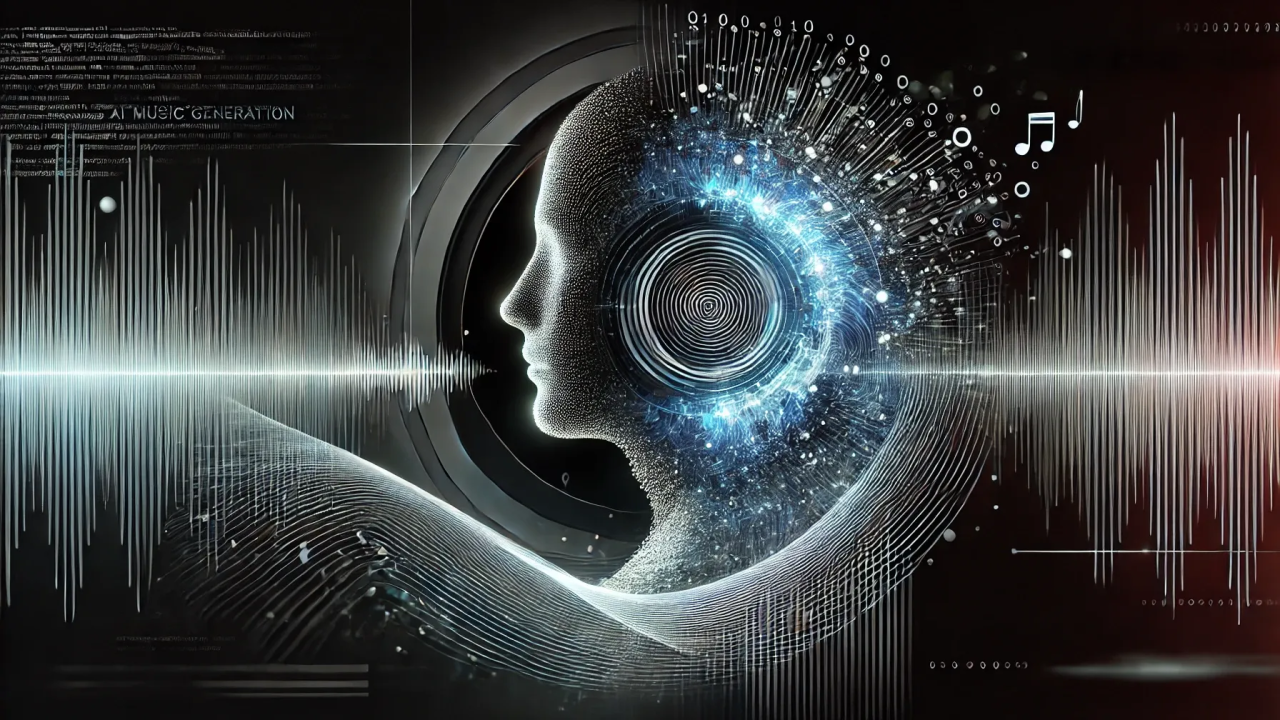
NOTE: I didn’t generate the art posted above, and sadly, I couldn’t find an artist linked. I found it on the interwebs. If this is your art, please reach out so I can give you credit. It’s super cool. My guess would be AI-generated, which leads us nicely into this convo.
Whether we like it or not, AI is here to stay. For me, the only question is how to best use AI when creating music. Based on conversations I’ve had with other musicians, opinions seem to land in one of 3 camps:
I fall into the 3rd option. I can write songs faster when I add AI to my workflow. I use AI to create drum tracks, bass tracks, and keys as needed. It’s a bit of a prompting nightmare, but it can be done, and it saves a TON of time composing and leaves more time for creative guitar playing/recording. I’m a guitarist. That means, for me, drums, bass, and other instruments are a bed for my guitar. I can actually feel other guitarists nodding right now, lol… The sooner I can finish the song “layout”, the sooner I can dig in with my guitar.
I used to spend hours, like 1000’s of hours, looking for the perfect bass loop or bass MIDI file for a song idea. I eventually found an amazing MIDI guitar plugin called Jam Origin. For the first time, I could play bass, keys, and any other polyphonic instruments on my guitar, but it was still “messy”. After recording the bass part, you’ve got to find a decent bass guitar VSTi. The MIDI file dynamics never fully match what’s being played on my guitar, but… it was way better than chasing loops and 3rd party MIDI files, and it was faster.
Drums (takes a deep breath and tries not to get triggered) are a completely different animal. Before Superior Drummer, it was all loops, creatively chopped up into arrangements, but never quite what I wanted. Superior Drummer was a massive workflow improvement, but it still took way too much time. It’s still a viable option, but the learning curve is vertical, and arranging drum tracks (i.e., picking the best MIDI groove files for your drum track) is a black hole of auditioning sounds and grooves. All of the stress lines on my face can probably be traced back to divorce and Superior Drummer. **shutters
My music production is faster now, but it still requires a ton of work and creativity. Here’s the short version: 1. I prompt Suno until my fingers bleed, trying to get the drum and bass parts I have in my head. Typically, 40 to 60 prompts + renders, but sometimes it takes a lot longer. 2. I rip the song into stems. This is problematic at best. There’s always bleed from other instruments and AI artifacts to deal with. If I can clean up the stem audio, I’ll drop it right in the DAW (my preferred option). Think, custom sound loops. If the audio is too mangled, I convert it to MIDI (Yes, it is its own nightmare) and spend hours editing the MIDI file and trying to dial in the VSTi. 3. I play and record my guitar parts. 4. Level and EQ the mix. 5. Master the song and go directly to therapy.
When stem separation technology gets better, my production will be clean and fast. If audio-to-MIDI technology improves, I’ll be in my sweet spot. I’d rather have full control over the drums via Superior Drummer. My songs sound much better when I use Superior Drummer, but man, if you don’t have a high-quality MIDI file, buckle in for days of editing. You can buy full song MIDI drum files, and some of them are quite good, but that can drain your wallet. I’ll continue to slog through my current workflow and hope for some AI advancements in stem separation and audio-to-MIDI conversion.
It’s still faster than my old workflow, but is it easier? It does sound better IMO, but it still requires a high level of creativity to make it all work. For me, AI is a tool. A janky tool, but still a tool. Like the first DAWs. Those not old enough to remember Cubase and others were a glitchfest for the first few years. Now DAWs are the standard. I mean, how else would you make music today? I see AI moving in the same direction. IMO, AI will become an afterthought and part of every tool we use. AI music tools will become clean and precise. I’m unclear on how AI will affect creativity. I can see AI audio mastering refined to the point where it’s the first and best option. AI mastering is good, but IMO, if you want beautifully transparent sound with punch and character, you need to dip in with a tool like Ozone, or if you’ve got the funds, some analog gear. Suno and other music AIs are no different. Sometimes you hit “create” and get a banger, but 98% of the time, the output either glitches or sounds “odd”.
Final Thoughts: While Suno and AI are not illegal, maybe there is a moral high ground to hold as we move forward into this bright future. People use AI for everything from short stories to final exams, music, art, and more. Is it our responsibility to declare AI whenever it is used? IMO, we should, but other than “because I think so”, it’s hard to make a universal compelling argument for “why”. I consider myself an artist, so maybe that’s why I push back a bit, but hey, I am using AI, so?? A funny parallel: I was a decorative painter years ago (i.e., painted textures on walls, faux marble, etc…). It’s a profession that’s been around for 100’s of years, steeped in tradition. When Home Depot and other stores started selling glazes, colored plasters, and painting tools like sponges, the OG artists got extremely offended and thought it was the “end of art”. Well, art didn’t die. It transitioned a bit, but it definitely didn’t die. Is that what’s happened with music right now? Hmm…
Oof. I just realized I should have an affiliate link for Suno and other products I mentioned. This is why musicians are poor, lol…
Hopefully, this read was helpful and/or entertaining. See ya again soon!
-Riff

 Space Station MetalCore