Vibomatic
Vibomatic is an in-between song I wrote while learning a new style. Watch the video, and see why I never delete a song, even the bad ones.
Read more: Vibomatic

Riffster Media
I've been Riffster for most of my adult life, but it doesn't mean what you think.
Riffster was my gamer name back in the day. There was a weapon in a now-defunct game called a “rift generator”. I chose the gamer name Riffster because it was a play on 2 themes: using rift generators (a lot) and riffing as a guitarist.
I grew up in Sacramento, California. The music scene was electric. Tons of bands playing all types of music, but mostly rock. Skip’s Music (opens in a new tab) was in a run-down building back then, but it was everything. Skip’s was the Costco of music equipment stores. Guitar Center, Sweetwater, etc… none of those stores existed yet. Skip’s was also a great place to find other musicians. I joined my first and only band back then. It was fun, but my chops were sketchy.
Shortly after my band experience ended, I bought a Tascam 4-track analog recorder (used) and started writing music. I had a decent acoustic and a POS electric, but I made it work. I wasn’t very good at deciphering cover songs (still not very good if I’m honest), but I excelled at writing original music. It just made sense, still does. I have hundreds of 4-track songs on cassette tapes in a box somewhere. Back then, it was too expensive for most musicians to create/burn a CD and order mass copies.
Then DAWs hit, and man, oh man, that was a game-changer for a lot of musicians. The VSTi selection was lame back then, but we had loops and Line 6. Every guitarist wanted the red kidney-shaped guitar sim. I got the Line 6 software. Fun Fact: the first version of Amp Farm was 23MB and took 12 hours to download, haha… Shortly after I got my hands on the Line 6 guitar software, Sony dropped a DAW named Acid, and I was hooked. I think (but not 100% sure) that Sony Acid was the first platform that provided a way for musicians to publish a song with one click, FOR FREE! The Sony music publishing platform was called Acid Planet. My profile had almost 100 songs, and a few of my songs topped the Acid Planet charts.
Sadly, Sony lost interest in Acid Planet and took it down. Shortly after, I lost interest in music and didn’t try to write anything until about 2010. VSTi instruments were gaining popularity, and for reasons I don’t fully understand, I abandoned my guitar in favor of a MIDI keyboard and started writing music again, but… if I’m honest, the music sucked. However, with products like Ozone, I learned how to mix and master songs.
After several years of creating horrible music, I picked up my guitar again, but I still wanted to incorporate the lush VSTi sounds. I experimented with the Sony/Boss MIDI guitar pickup, but it wasn’t until I found Jam Origin (opens in a new tab) that everything solidified, and I began writing decent music. Today, with a combination of Superior Drummer, EZBass, Native Instruments VSTi products, and Jam Origin, I feel like I’m creating the music I’ve been hearing in my head for decades.
A lot has changed since the early 2000s. Now we have amp sims that sound just as good as a live amp in the mix. From the early 2000s until about 2015, I wrote 283 songs (that I know of, but probably more). Most of the songs were an experiment and not very listenable, but every crappy song taught me something.
In 2025, I started writing again, but this time I knew my music should start with guitar and work out from there. I’m a guitarist and not a keyboardist or bass player. Definitely not a drummer, lol… Today, I harness those amazing VSTi instruments from my guitar fretboard. With some creative routing in Reaper, I learned how to blend distorted or clean guitar with any VSTi sound I can find, or solo a VSTi instrument without any guitar sounds at all. It’s a lot of fun, and the possibilities are literally endless.
In 2026, I added AI (Suno) into my workflow. I use Suno for drum and bass tracks. Suno is a bit janky, but it’s a good starting point and can save time. I explain my full workflow and how Suno fits. You can read it here: How I Use Suno for Drums & Bass Under Real Guitar.
My music is wildly different from most instrumental guitar music, but I hope you enjoy it because I LOVE coming up with new ideas and creating this strange music.
Thank you for listening!
-Riff (a.k.a., Dan Campbell)
Update: In early 2026, I started learning Blender as a hobby. I honestly didn’t think much would come of it. I wanted to build a cool stone hut I had in mind. The hook was set. I’m a total VFX junkie and it’s the perfect medium to showcase my music. As of this posting, I have a Soarin-style video, a cool land with a phoenix named Ember, a magic alley story, and a fun space station video (I’ve always wanted to make a space station! Right?).
No idea if my videos will garner any interest, but man, I love making them. I just finished the next Ember score (one of my favorite songs) and am working on the video.
Vibomatic is an in-between song I wrote while learning a new style. Watch the video, and see why I never delete a song, even the bad ones.
Read more: VibomaticHints of Madness, an ambient guitar song made with Neural DSP's Archetype: Rabea X and its stock IRs. Watch the raw mix and an honest, unsponsored take.
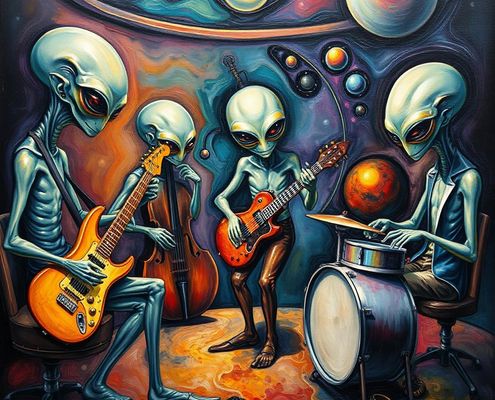
Read more: Hints of Madness – Neural DSP Archetype: Rabea X DemoListen to Alien Jazz Lounge, a tongue-in-cheek sci-fi jazz song made after a Nashville sound engineer joked that a real musician would write some jazz.
Read more: Alien Jazz Lounge